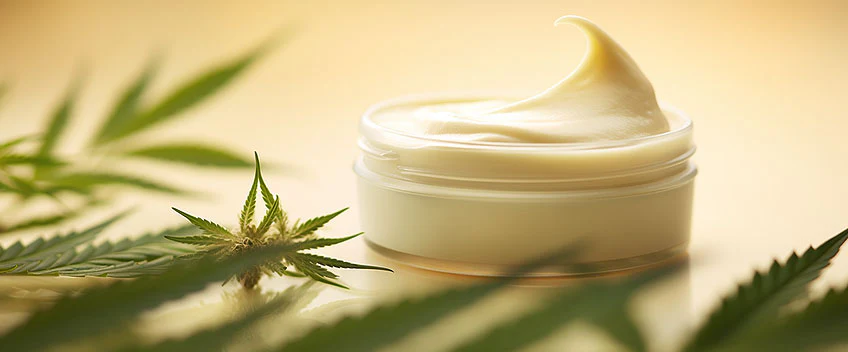
CBD lotion is a topical skincare or wellness product infused with cannabidiol (CBD), a non-psychoactive compound extracted from hemp. Unlike edibles, oils, or gummies that deliver CBD systemically (throughout the body), lotions are designed for localized application directly to the skin.
These products typically combine CBD (in isolate, broad-spectrum, or full-spectrum form) with moisturizing bases such as shea butter, aloe vera, coconut oil, jojoba oil, or other emollients, along with additional ingredients like essential oils, arnica, menthol, or vitamin E for enhanced effects.
CBD lotions do not produce a psychoactive “high” because cannabinoids applied topically do not readily penetrate deep enough to reach the bloodstream in significant amounts (unless specifically formulated as transdermal patches). Instead, they target skin-level and superficial muscle/joint receptors of the endocannabinoid system.
As of January 2026, CBD Lotions remain among the most popular topical formats, widely used for targeted relief of sore muscles, joint discomfort, dry skin, minor inflammation, post-workout recovery, and general skin soothing.
How CBD Lotions Work
The skin contains its own endocannabinoid system with CB1 and CB2 receptors, as well as TRPV1 (vanilloid) receptors involved in pain and inflammation signaling. When CBD Lotion is applied:
- CBD interacts locally with cannabinoid receptors in the skin, subcutaneous tissue, and nearby nerve endings.
- It may modulate inflammatory cytokines, reduce prostaglandin production, and influence TRPV1 channels (similar to how capsaicin or menthol works).
- Most formulations remain superficial — effects are felt in the applied area rather than systemically.
- Very little (if any) CBD enters the bloodstream, which is why topical products are considered non-intoxicating and safe for drug-tested individuals.
Absorption depends on:
- Concentration of CBD
- Carrier oils/fat content (lipid-rich bases improve penetration)
- Skin thickness and condition
- Whether the product is labeled “transdermal” (deeper delivery)
Types of CBD Lotions
- CBD Isolate Lotions
- Made with pure CBD (99%+ purity)
- 0.0% THC
- Ideal for people who must avoid any trace THC (athletes, employees with strict drug policies)
- Broad-Spectrum Lotions
- Contain CBD + other cannabinoids and terpenes, but THC removed
- Potential mild entourage effect without THC
- Full-Spectrum Lotions
- Retain full plant profile including trace THC (<0.3%)
- Strongest potential entourage benefits
- Higher legal and drug-test risk in strict environments
- Specialized Formulas
- Cooling (with menthol/camphor) — for acute soreness
- Warming (with capsicum/ginger) — for chronic stiffness
- Arnica + CBD — bruise and swelling support
- Unscented — sensitive skin
- High-potency (1000–5000 mg per jar) — targeted intensive use
Potential Benefits
While large-scale clinical trials on topicals are still limited, common reported and studied uses include:
- Muscle & Joint Discomfort — Post-exercise soreness, arthritis flare-ups, back/neck tension
- Inflammation Reduction — Minor swelling, redness
- Skin Soothing — Dry, irritated, or eczema-prone skin (anti-inflammatory + moisturizing)
- Recovery Support — Athletes use after workouts or physical therapy
- Targeted Headache Relief — Applied to temples/neck (some combine with peppermint)
- General Skin Health — Hydration, antioxidant effects from accompanying botanicals
Many users report faster localized relief compared to oral CBD, especially for surface-level issues.
How to Use CBD Lotion
- Clean and dry the target area.
- Apply a small amount (pea to dime size depending on area).
- Gently massage in circular motions until absorbed.
- Reapply every 4–6 hours or as needed (most last 4–8 hours on skin).
- Wash hands after application (especially if product contains menthol/capsicum).
Tips
- Patch test on inner forearm first (24 hours) to check for sensitivity.
- Use consistently for chronic issues — effects often build over days/weeks.
- Combine with oral CBD for dual local + systemic support if desired.
Dosage & Potency
Topical dosing is measured by total mg of CBD per container rather than per application:
- Low potency — 100–300 mg per jar (general skin care)
- Medium — 300–1000 mg (moderate daily use)
- High potency — 1000–5000+ mg (targeted relief, larger areas)
A rough guide: 5–20 mg CBD applied to a small area is common for spot treatment. Larger areas or higher needs may use more.
Side Effects & Safety
Topical CBD is very well tolerated:
Common (mild & rare):
- Temporary redness or warmth (especially cooling/warming formulas)
- Mild skin irritation (usually from other ingredients like essential oils)
- Greasy residue (oil-heavy bases)
Rare:
- Allergic reaction to carrier oils, botanicals, or preservatives
Because absorption into bloodstream is minimal, systemic side effects (drowsiness, dry mouth) and drug interactions are extremely unlikely compared to oral CBD.
Legality in 2026 – India (Maharashtra / Nagpur)
Hemp-derived CBD topicals (including lotions) with <0.3% THC are legal in India under current regulations:
- NDPS Act 1985 — Permits low-THC hemp derivatives
- FSSAI — Regulates as cosmetic or food-grade supplement (if labeled accordingly)
- Cosmetics Rules — Many CBD lotions sold as “herbal/moisturizing creams”
Key compliance points for India:
- Must show THC = not detected or clearly <0.3% on third-party COA
- No intoxicating/psychoactive claims allowed
- Purchase from reputable online sellers or authorized pharmacies
- Avoid products labeled “full-spectrum” unless COA confirms zero-detectable THC
Maharashtra does not have a broad hemp retail market; most users order online from compliant Indian or international vendors with Indian customs clearance.
How to Choose a Quality CBD Lotion
Look for:
- Third-party lab testing (COA) showing exact CBD mg, THC = ND, no heavy metals/pesticides
- Clear ingredient list (avoid mystery “proprietary blends”)
- Hemp source (organic, U.S./EU preferred when possible)
- Transparent brand reputation
- Packaging that protects from light/air (dark glass or opaque tubes)
Popular formats in 2026 include pump jars, squeeze tubes, roll-ons (for joints), and stick applicators.
Conclusion
CBD Lotion offers targeted, non-intoxicating, skin-level support for muscle soreness, joint stiffness, inflammation, dry skin, and recovery — without the systemic effects or legal/drug-test concerns of oral edibles or THC products. In regions like Nagpur, Maharashtra, zero-THC or isolate-based lotions are the safest and most compliant choice.
For best results:
- Choose lab-tested products
- Start with medium potency
- Apply consistently to problem areas
- Combine with stretching, heat/cold therapy, or oral CBD if needed
While not a miracle cure, many users find CBD lotion a practical, pleasant addition to daily self-care — especially for active lifestyles or age-related discomfort. Always consult a healthcare provider if using for chronic conditions or alongside medications.
More articles by ZMR Researche:
https://www.zionmarketresearch.com/de/report/bath-and-shower-products-market
https://www.zionmarketresearch.com/de/report/cheese-powder-market
https://www.zionmarketresearch.com/de/report/pharmaceutical-filtration-market
https://www.zionmarketresearch.com/de/report/beverage-acidulants-market
https://www.zionmarketresearch.com/de/report/business-rules-management-system-market