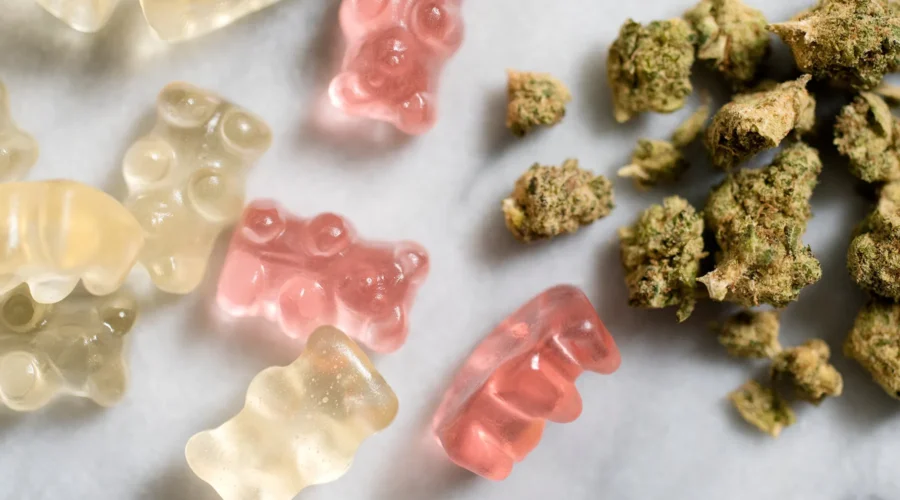
Cannabis Gummies: A Comprehensive Guide
Cannabis gummies are one of the most popular forms of cannabis edibles, offering a discreet, convenient, and flavorful way to consume cannabinoids like THC (tetrahydrocannabinol) and CBD (cannabidiol). These chewy treats resemble regular gummy candies but are infused with cannabis extracts, providing effects ranging from relaxation and pain relief to euphoria. As cannabis legalization expands, gummies have surged in popularity due to their precise dosing, long shelf life, and smoke-free consumption method. This article explores their history, production, effects, benefits, risks, legal status, and more.
What Are Cannabis Gummies?
Cannabis gummies are edible candies infused with cannabis-derived compounds, primarily THC (the psychoactive component responsible for the “high”) or CBD (a non-psychoactive compound known for therapeutic effects). They come in various flavors, shapes, and potencies, often mimicking popular non-cannabis candies like bears, rings, or worms.
- THC Gummies: These contain delta-9 THC or variants like delta-8, delivering intoxicating effects.
- CBD Gummies: Non-intoxicating, focused on wellness benefits like stress reduction.
- Hybrid Gummies: Combine THC and CBD for balanced effects, sometimes with minor cannabinoids like CBN (for sleep) or CBG.
Unlike smoking or vaping, edibles are metabolized through the digestive system, converting THC into a more potent form (11-hydroxy-THC) in the liver.
History of Cannabis Gummies
Cannabis edibles date back thousands of years. Ancient cultures in India and the Middle East consumed “majoun” (a hashish confection) and “bhang” (a cannabis-infused drink or sweet). In the West, edibles gained notoriety in the 1950s with Alice B. Toklas’s cookbook featuring “haschich fudge,” and pot brownies became icons of 1960s counterculture.
Modern gummies emerged in the 1990s with medical marijuana legalization in states like California. Early versions were homemade, but commercialization boomed after 2014 when Colorado and Washington legalized recreational cannabis. The 2018 U.S. Farm Bill further accelerated growth by legalizing hemp-derived products (under 0.3% delta-9 THC), leading to widespread delta-8 and delta-9 gummies.
Today, gummies dominate the edibles market, with brands innovating flavors and formulations using real fruit and terpenes.
How Cannabis Gummies Are Made
Production involves infusing cannabis extracts into a gummy base:
- Extraction: Cannabinoids are extracted from cannabis or hemp using solvents or CO2, creating oils or distillates.
- Decarboxylation: Raw cannabis is heated to activate THC/CBD.
- Infusion: Extracts are mixed with gelatin (or pectin for vegan options), sweeteners, flavors, and colors.
- Molding and Setting: The mixture is poured into molds and cooled.
- Testing and Packaging: Lab-tested for potency and contaminants; packaged child-resistant.
Homemade versions melt store-bought gummies and add tinctures, but commercial ones ensure consistency.
Effects of Cannabis Gummies
Effects onset in 30-120 minutes, peak at 2-3 hours, and last 4-12 hours—longer and more intense than inhalation.
- Positive Effects: Euphoria, relaxation, pain relief, increased appetite, creativity.
- Negative Effects: Anxiety, paranoia, dry mouth, impaired coordination; overconsumption can cause nausea or hallucinations.
Dosing starts low (2.5-5mg THC for beginners). Factors like metabolism and tolerance influence intensity.
Benefits and Risks
Benefits:
- Discreet and lung-friendly alternative to smoking.
- Precise dosing for medical use (e.g., chronic pain, insomnia, anxiety).
- Longer-lasting relief for conditions like nausea or inflammation.
Risks:
- Delayed onset leads to overconsumption.
- Accidental ingestion by children (packaging often mimics candy).
- Potential for stronger intoxication; drug test failures.
- Side effects like increased heart rate or dependency with heavy use.
Always store securely and consult a doctor, especially if pregnant or on medications.
Legal Status (as of December 2025)
Legality varies:
- Federally: Hemp-derived gummies (<0.3% delta-9 THC) were legal under the 2018 Farm Bill, but recent 2025 provisions in spending bills have imposed strict limits or bans on many intoxicating hemp products, potentially reclassifying them.
- State-Level: Recreational cannabis (including gummies) legal in 24+ states; medical in more. Hemp-derived THC remains available in many, but restrictions grow.
- Changes are rapid—check local laws.
Popular Brands
Leading brands include:
- Wyld (real-fruit flavors).
- Wana (research-backed formulations).
- Kanha (diverse, high-quality).
- Kiva, Smokiez, Heavy Hitters.
- Hemp-focused: Area 52, Cornbread Hemp.
These emphasize quality, testing, and innovation.
Cannabis gummies offer an accessible entry to cannabis benefits but demand responsible use. Start low, go slow, and stay informed on laws. Whether for recreation or relief, they represent a modern evolution of ancient traditions.
Reach Out us at the following address:
Zion Market Research
244 Fifth Avenue, Suite N202
New York, 10001, United States
Tel: +1 (844) 845-5245
Email: [email protected]
More articles by InnovateIQ Researche:
https://www.zionmarketresearch.com/de/report/process-gas-compressor-market
https://www.zionmarketresearch.com/de/report/reversible-textile-coloring-market
https://www.zionmarketresearch.com/de/report/sintered-zns-lenses-market
https://www.zionmarketresearch.com/de/report/optical-hybrid-film-market
https://www.zionmarketresearch.com/de/report/healthcare-logistics-market