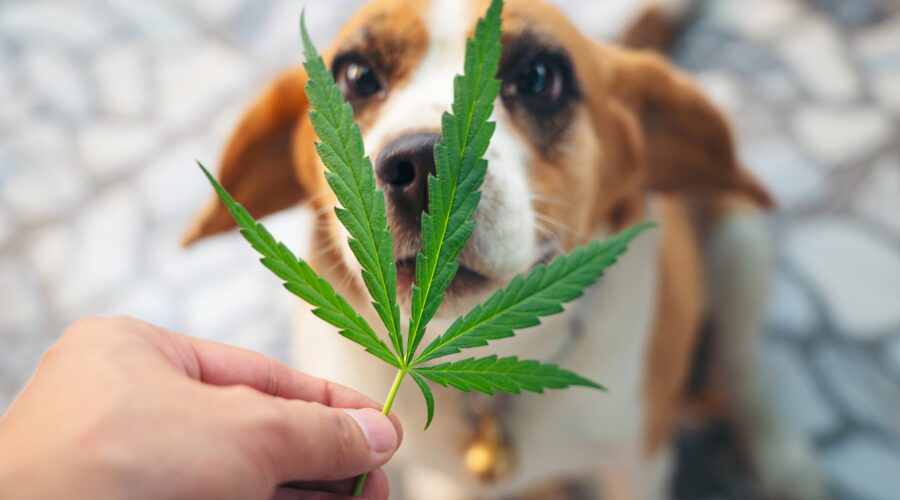
Cannabis for Dogs refers to the use of cannabis-derived compounds, primarily cannabidiol (CBD) and occasionally low or zero-THC products, to address various health issues in canines. Unlike human cannabis use, which often includes psychoactive tetrahydrocannabinol (THC), veterinary applications focus almost exclusively on non-psychoactive CBD due to THC’s toxicity in dogs. CBD is one of over 100 cannabinoids found in the cannabis plant and interacts with the endocannabinoid system (ECS) present in mammals, including dogs.
Interest in cannabis for dogs surged in the 2010s alongside human CBD popularity and increasing pet medicalization. By 2025, the global pet CBD market is valued at approximately USD 500-800 million, with strong growth driven by anecdotal reports, emerging research, and product availability. Products include oils, treats, capsules, and topicals specifically formulated for pets. While many owners report benefits for anxiety, pain, seizures, and inflammation, veterinary consensus remains cautious due to limited large-scale clinical evidence and regulatory gaps.

The Endocannabinoid System in Dogs
Dogs possess an endocannabinoid system similar to humans, with CB1 receptors (primarily in the brain and nervous system) and CB2 receptors (immune cells, peripheral tissues). Endogenous cannabinoids like anandamide regulate pain, mood, appetite, and inflammation. CBD influences this system indirectly by inhibiting FAAH (the enzyme breaking down anandamide) and modulating receptor activity without direct binding, unlike THC which strongly activates CB1 and causes intoxication.
THC is highly toxic to dogs due to higher CB1 receptor density in their brains, leading to “static ataxia,” incontinence, and potentially life-threatening symptoms at doses as low as 0.1-0.3 mg/kg.
Common Uses and Reported Benefits
Pet owners and some veterinarians use CBD for:
- Anxiety and Stress Separation anxiety, noise phobias (fireworks, thunderstorms), travel stress. Reported calming effects without sedation.
- Pain and Inflammation Osteoarthritis, hip dysplasia, post-surgical pain, chronic conditions. CBD’s anti-inflammatory properties may reduce reliance on NSAIDs.
- Seizures and Epilepsy Refractory idiopathic epilepsy; some studies show seizure frequency reduction similar to human results.
- Cancer Support Symptom management (pain, appetite loss, nausea); limited evidence for anti-tumor effects.
- Skin Conditions Atopic dermatitis, allergies; topical CBD for localized itching/inflammation.
- Gastrointestinal Issues Inflammatory bowel disease, appetite stimulation.
- Aging and Mobility Senior dogs with cognitive dysfunction or joint stiffness.
Anecdotal success is widespread, supported by small veterinary studies (e.g., Cornell University trials on arthritis, Colorado State University on epilepsy).
Forms and Administration
Products formulated for dogs avoid THC and use hemp-derived CBD (<0.3% THC):
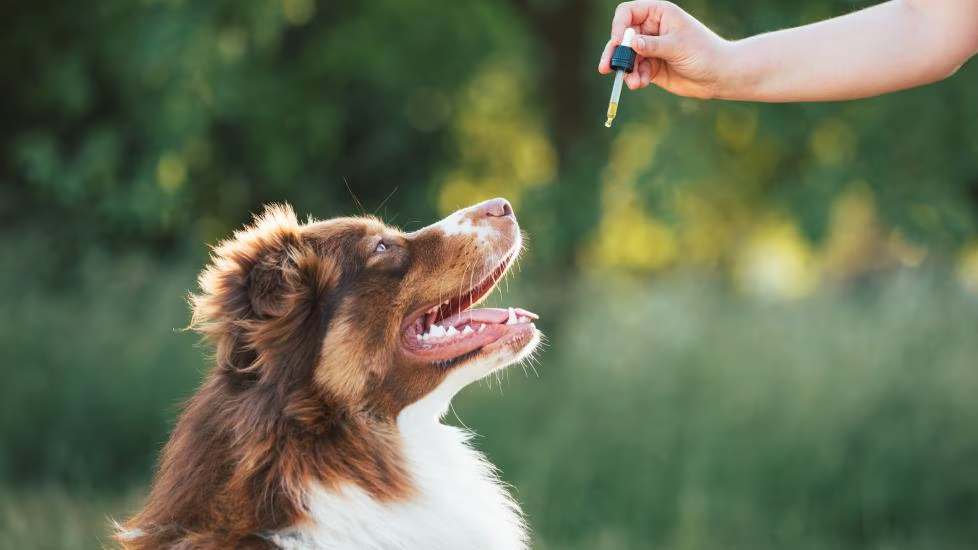
- Oils/Tinctures: Sublingual or added to food; bacon, salmon flavors mask taste.
- Treats/Chews: Fixed doses for convenience.
- Capsules: Precise dosing.
- Topicals: Balms for joints/skin.
Dosing: Typically 0.1-0.5 mg CBD/kg body weight twice daily, starting low and titrating. Full-spectrum (with trace cannabinoids/terpenes) preferred for potential entourage effect; isolates for purity.
Scientific Evidence
Research is growing but limited:
- Positive: Cornell (2018) – CBD oil reduced pain/ improved activity in osteoarthritic dogs. Colorado State (2019) – 89% seizure reduction in epileptic dogs. Various studies: Anti-inflammatory effects via CB2 modulation.
- Mixed/Inconclusive: Some trials show no significant difference vs. placebo for certain conditions.
- Gaps: Few large, randomized, placebo-controlled trials; long-term safety data scarce.
Veterinary organizations (AVMA, CVMA) acknowledge potential but urge caution pending more evidence.
Risks and Side Effects
CBD is generally well-tolerated, but risks include:
- Mild: Dry mouth, lowered blood pressure, drowsiness.
- Moderate: Elevated liver enzymes (ALP) at high doses.
- Interactions: With medications metabolized by CYP450 enzymes (e.g., anti-seizure drugs).
- THC Contamination: Even “THC-free” products may contain trace amounts toxic to dogs.
- Overdose: Rare but possible ataxia, vomiting.
Quality variation: Unregulated market risks mislabeling (studies show 30-70% inaccuracy in CBD content).
Legal and Regulatory Status
- United States: Hemp-derived CBD (<0.3% THC) legal federally (2018 Farm Bill), but FDA prohibits claims as drugs/supplements for animals. Veterinary CBD requires prescription in some states.
- Canada/Europe: Similar hemp allowances; veterinary products often regulated as supplements.
- Global: Varies; many countries restrict all cannabis-derived products for pets.
Reputable products carry NASC (National Animal Supplement Council) seal or third-party testing certificates.
Choosing and Using CBD for Dogs
Guidelines:
- Consult veterinarian first.
- Select full/broad-spectrum from reputable brands.
- Verify third-party COAs (Certificate of Analysis) for potency, contaminants.
- Start low (0.1 mg/kg), monitor 1-2 weeks.
- Avoid human products (xylitol, chocolate, high THC).
Conclusion
Cannabis-derived CBD offers promising supportive care for dogs with anxiety, pain, seizures, and inflammation, backed by growing anecdotal and preliminary scientific evidence. However, it is not a cure-all, and risks from poor-quality products or improper dosing warrant caution. As veterinary research expands and regulations clarify, CBD’s role in canine wellness will likely become more defined. Responsible use under professional guidance maximizes benefits while ensuring pet safety.
More articles by ZMR Researche:
https://www.zionmarketresearch.com/de/report/glycerol-monostearate-market
https://www.zionmarketresearch.com/de/report/anti-static-bags-for-electronics-market
https://www.zionmarketresearch.com/de/report/asset-recovery-services-market
https://www.zionmarketresearch.com/de/report/surface-mount-technology-market-size
https://www.zionmarketresearch.com/de/report/subsea-trencher-market