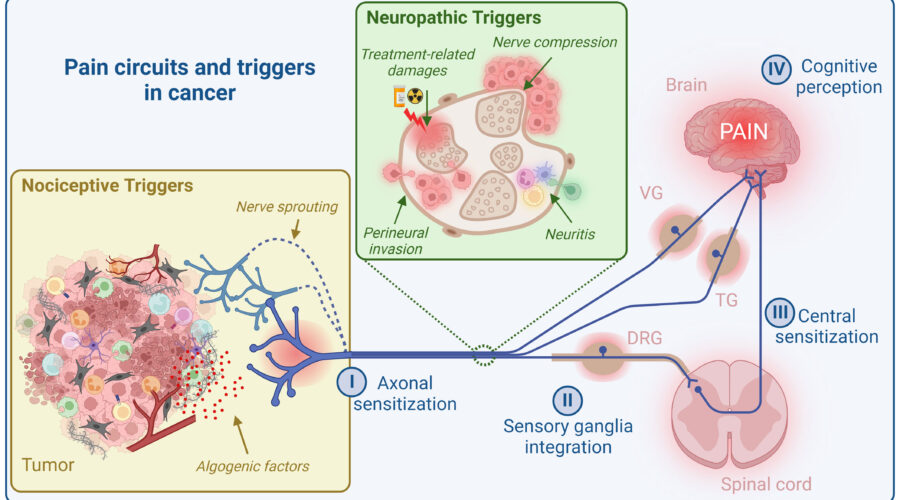
Cancer pain is a complex, multifaceted symptom experienced by many individuals diagnosed with cancer. It arises from the disease itself, treatments, or related complications, significantly impacting quality of life. Prevalence is high: approximately 55% of patients undergoing anti-cancer treatment and 66% with advanced disease report pain, with 33–64% overall across stages.
Pain can be acute or chronic, mild to severe, and often undertreated despite effective options. Guidelines from NCCN (Version 2.2025), WHO, and ASCO emphasize comprehensive assessment and multimodal management.

Types and Causes of Cancer Pain
Cancer pain is classified by mechanism and duration:
- Nociceptive Pain: From tissue damage (somatic: bone/muscle; visceral: organs). Often aching/throbbing.
- Neuropathic Pain: Nerve damage/compression; burning, tingling, shooting.
- Breakthrough Pain: Sudden flares despite baseline control.
- Incident Pain: Triggered by movement/activity.
Causes:
- Tumor-related (66–70%): Invasion/compression of bones, nerves, organs.
- Treatment-related: Surgery, chemotherapy (neuropathy), radiation (mucositis, fibrosis).
- Other: Muscle spasms, constipation from opioids.
Prevalence highest in head/neck, gastrointestinal, and advanced cancers.
Assessment
Regular screening with tools like Numeric Rating Scale (0–10) or visual scales. Comprehensive evaluation includes location, intensity, quality, aggravating/relieving factors, and impact on function.
Treatment Options
Follow the WHO Analgesic Ladder (updated in guidelines): Stepwise escalation with non-opioids, weak opioids, strong opioids, plus adjuvants.
Pharmacological
- Non-Opioids: Acetaminophen, NSAIDs for mild pain/inflammation.
- Opioids: Morphine, fentanyl, oxycodone, hydromorphone for moderate-severe; methadone/buprenorphine for rotation.
- Adjuvants: Antidepressants/anticonvulsants (gabapentin, duloxetine) for neuropathic; steroids for bone/inflammation; bisphosphonates for metastases.
MAT essential for severe pain; monitor side effects (constipation, nausea).
Non-Pharmacological
- Physical: Exercise, TENS, acupuncture, massage.
- Psychological: CBT, mindfulness, hypnosis.
- Interventional: Nerve blocks, radiotherapy for bone pain, celiac plexus block.
Integrative therapies (e.g., acupuncture) supported by SIO-ASCO guidelines.
Challenges and Breakthroughs
Undertreatment persists due to opioid fears, access issues. 2025 updates emphasize safe prescribing, ketamine adjuvants, and personalized care.
Cancer pain is manageable in most cases with multimodal approaches. Early intervention and ongoing assessment are key—consult specialists for tailored plans. Resources: NCCN, WHO, ASCO guidelines.
More articles by ZMR Researche:
https://www.zionmarketresearch.com/de/report/polyurea-greases-market
https://www.zionmarketresearch.com/de/report/gas-chromatography-gc-market
https://www.zionmarketresearch.com/de/report/aromatic-compounds-market
https://www.zionmarketresearch.com/de/report/natural-food-color-market
https://www.zionmarketresearch.com/de/report/non-stick-coatings-market